
The Grand Illusion
We continue participating in our own deception.

When I was a child, I was fascinated by magic tricks and illusions, as many children are. I recall quarters disappearing and reappearing behind my ears, having my nose taken from me, and fingers being pulled apart at the knuckle. I recall a ‘magic kit’ toy set with a cape and a wand and instructions on how to perform simple tricks guaranteed to amaze whoever was around to witness. I recall major television events featuring the magician, David Copperfield, and was overjoyed when my parents took the family to see his live stage show. Over the course of nearly two decades of my adult life in Hollywood, I had dinners at the legendary Magic Castle, was amazed during intimate magic shows by magicians hired to entertain friends on their birthdays, and found myself in social situations with David Blaine, whose demonstrations remain unsolved mysteries in my mind.
At every level of simplicity or complexity, sleight or ham-handedness, and no matter the artistry involved in the illusion’s conceit, it remains true that what we witness is not magic at all. What we witness, when an illusion succeeds, is a process our minds are unequipped to comprehend. We are given a premise and a conclusion with the middle stages obscured, leaving nothing but blank spaces in our minds. We have no explanation for what we have observed. The magician has blinded us to the process through deception, distraction, or the performance of a rare and well-developed physical skill, just as he intended.
What happened remains a mystery. But no matter the degree of our confusion, at no point was what we witnessed magic. No matter the intensity of our amazement, there exists a simple, worldly explanation for what we have seen. What we are dealing with, then, is not actually a violation of reality as we know it, it is nothing more than an information problem.
A magician never reveals his tricks, we are told. Once the trick is revealed, the illusion fails. It ceases to amaze. Witnessing the performance is no longer witnessing an illusion. It is no longer witnessing a premise and conclusion with the process obscured. All we can witness once the trick is revealed is performative deception. It is like being subjected to a pathological liar as he spins his latest yarn, understanding the entire time that he is lying. We become disengaged, a level removed, no longer mapping the liar’s story onto our perceived reality and discover ourselves merely watching a trickster as he attempts to tailor his deceptions in real time to overcome our incredulity.
Nothing about the trick has changed, but upon new information, our experience of the trick is irrevocably altered. Rather than watching some beautiful but unfortunate woman get sawed in half and then put back together somehow, we watch how smoothly an actress in a leotard climbs into a box while another actress in an identical leotard, already in the box, slides her legs out. We might still ooh and ahh as we see the poor lady dismembered for our entertainment, so as not to disillusion anyone who might be ignorant to the trick, but then we are merely volunteering to join the deceiver in his deception.
As adults, we might choose to turn off our skepticism for the sake of our enjoyment, but most of us understand that we are not, in fact, witnessing magic, and once the information problem is solved, the spell is broken. To become fully aware of this process is to break the spell regardless of whether the information problem has been solved. The blank spaces do not need to be filled. The mystery can remain, and we can nonetheless understand that what we are witnessing is an illusion, a trick, with a simple, real-world explanation to which we simply are not privy. Something happened, we know not what, but we can be certain it was not magic. It was a simple, physical procedure meant to appear otherwise impossible within the framework of how reality operates.
“Now, for my next trick…”
To watch a magic show is to have the trick announce itself. In one way or another, the magician signals to us (even in absence of the old trope) that we are about to watch a performance meant to confuse us to the point at which we delight in amazement and disbelief at what we have witnessed. Because there is no question in the realm of magic shows about whether what we will witness is a performance of illusion, we are conditioned to think there exists, at all times, a bright dividing line between that which is performative magic and that which is real but mysterious. But there is no line. It is entirely possible to witness the performance of illusions without suspecting a thing, believing we have witnessed an unexplainable event in reality.
Though we are loath to admit it, this happens all the time. We are gullible to the point that we put ourselves at risk, willfully credulous when we are promised suitable rewards or in hopes of avoiding opprobrium, and we engage in routine self-deception to stave off the terrifying realization of how much we simply do not know. In fact, the domain of reality as we know it is composed, in large part, of deceptions. We cannot deny that the world beyond our direct experience is, in many cases, constructed on foundations of unreliable (if not verifiably false) information. We are well aware of being subjected, daily, to fake news and its byproducts, including the beliefs and actions of those who process the fake news as real. The phenomenon of fake news is not a new one. We tell ourselves it cannot all be fake, but why can’t it be? The news has been fake for as long as there has been news. Because the news was fake a hundred years ago, our history—the compilation of past fake news—is also fake, certainly in part, but possibly in full. The fake news of today will be the official history of the future. On top of the fake news, we are subjected to relentless propaganda designed to create in us a never-ending series of beliefs we otherwise would not hold, ideas we could never possibly glean from our experience of reality, and realities manufactured specifically to convince us of certain ideas spanning the breadth of human knowledge. None is immune, neither religion, nor science, nor war. We are censored well beyond what we detect, not only outbound, when we are barred from saying the things we wish to say to whom we wish to say them, or when we are banned from social media platforms, but inbound when our sources of information are limited and the information we receive is manipulated, preventing us from accessing the information we might need to successfully navigate our realities.
Unwittingly, we are subjected to the illusion, which means we are subjected to the consequences of being deceived. For as long as the trick works, we are held under its sway. We will respond to the trick in the way the magician intends for us to respond. We live, in a true sense, under a spell. We keep ourselves under the spell for our own entertainment, for rewards, and to avoid ruining the trick for others who seem to enjoy it. We remain under the spell because the problem introduced upon admitting our actions are being guided by deception is a difficult one to unwind.
For all of human history, the true adversary has operated on the basis of deception for its own advancement and the benefit of those who are willing to play along. The adversary’s system, for all intents and purposes, is a grand illusion made perceptually real through our participation. The trick becomes real to the extent we believe it is real. The consequences of our belief are those intended by the spellcaster. Each time we play along and act accordingly, the trick succeeds, whether or not we truly believe. Each time, the adversary’s interests are advanced and we are exploited. Because we are the targets of the deception, we are on unshakeable ground in assuming that the deception is intended to harm us for the benefit of the spellcaster and those willing to play along.
All that is required to break the spell is our disbelief, individually and then collectively. The system succeeds as a function of successful deception. Still, we refuse. We have been successfully tricked into believing that there is not a base-layer objective Truth, only right and wrong interpretations of so-called evidence derived from material reality as we know it and the moral relativism that follows. Because we do not care to identify ourselves as active participants in our own deception and the deception of our loved ones, we conform to consensus and declare that we are not being deceived. That which we know to be an illusion, that which must be an illusion, is recast as entirely real and defended to the death. We have been conditioned to allow the trick to work all the time.
We tell ourselves this cannot be so. No matter how thoroughly we have been hoodwinked, no matter how far we have traveled into the False Reality, we imagine ourselves to be considerably better than average at discerning which fake news is true and which is false, when we should trust the Experts and when not to. The Science fails us, for instance, on climate change and vaccines but, we pretend, it would not deceive us about how technology operates or the nature of our cosmos. We are no more successful in discerning these parts of reality than we are in recognizing every illusion. We are, essentially, only able to know we are being deceived when the magician announces his trick or when enough people become willing to break consensus and admit that the suspicions we have are valid and we are, in fact, being deceived.
We rationalize that deception cannot happen at such a significant scale. We could not have been deceived about the Titanic or the World Wars or the moon landing or Vietnam. We could not have been deceived about 9/11 or the JFK assassination. We could not be deceived about our elections or the foundational legitimacy of our political system. We could not have been deceived about what the wealthy and powerful intend while they attempt to birth the false god of the material realm.
But then again, David Copperfield made the Statue of Liberty disappear. He walked straight through the Great Wall of China. These illusions were broadcast nationally on network television—government-regulated public airwaves. The same network that broadcasts the nightly news and 60 Minutes. The same network that hosts presidential debates on the same government-regulated public airwaves. Thank goodness Copperfield’s performances were properly labeled as magic shows, or we would not have been able to tell. The Screen cannot help but act as a layer of deceptive remove, but still, we believe. We believe in the bright dividing line. David Copperfield’s televised illusions are magic, broadcast for our entertainment. Presidential debates and national news broadcasts are serious, austere affairs, grounded in reality and presented with gravitas. It just so happens that they are broadcast by the same government-regulated networks across the same public airwaves. It just so happens that the same corporate conglomerates sponsor the broadcasting of all types of content. We would properly discern reality from fiction, but that would ruin the trick. We pretend we desire truth, but we are more than happy to settle for high production value as long as the incentive package is properly structured.
The magician has considerable advantages over his audience when the mediating layer of the Screen exerts its own control and influence, but substantial advantages remain intact even in a live, real-world setting. The magician initiates the trick and controls the pace of play. He knows what is intended while the audience maintains a constant state of surprise. The magician knows if his props or his environment are falsified or manipulated in ways that are undetectable to the audience. Magicians are talented at manipulating the attention and emotions of audience members. He employs all of these to fortify the illusion with maximum disguise and deception. And, of course, the audience has volunteered to be deceived.
But what if an audience member notices the deception and chooses to break consensus, standing up among the crowd, drawing attention, and calling out the trick? Perhaps he has seen the trick too many times and is watching only its execution, specifically to detect the trick. What if the other audience members notice the magician’s move and decide they’ve been tricked too many times? What happens when they begin to stand up and say, “I see what he’s doing”? The performance is immediately ruined. If the audience members, while leaving the show, tell the people standing in line for the next go-round the secret to how the trick is performed, the trick fails for them as well.
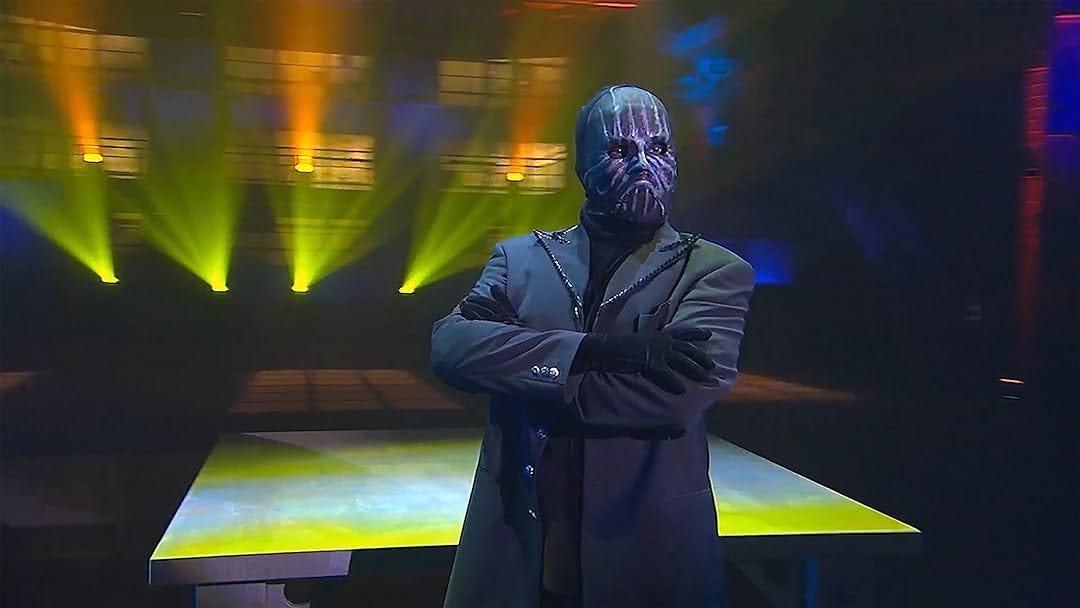
What if the magician’s advantages are taken away? Beginning in the late 1990s, the Fox network broadcast, over government-regulated public airwaves, a show called Breaking the Magician’s Code: Magic’s Biggest Secrets Finally Revealed. The show was centered around The Masked Magician (later revealed to be a man whose stage name was Val Valentino). His identity was withheld from the audience at the time and his face was obscured by a mask, because the concept of the show was that a magician would systematically violate the magician’s code—he would shatter the mysteries of how the tricks were performed, filling in all the blank spaces in the minds of the audience members, breaking the spell of those tricks forever. If anyone were to discover his identity, he would have hell to pay from the Magician’s Alliance.
Too many people came to understand exactly what the magician must ensure they do not understand. For anyone who watched the show, each of the tricks was permanently destroyed. From that point on, no one would want to watch a pretty young woman pretend to be sawed in half while another woman laid upside down and wiggled her toes. A limited hangout of sorts, the show was intended to convince its audience that we were too smart for magic tricks. It drew a bright dividing line. From that point on, only real magic would be sufficient to hold our attention. Our ability to separate fiction from reality had been fine-tuned. Fool me once, shame on you. Fool me twice? Fool me… you can’t get fooled again, or something. Whatever the show’s intent, and whatever the audience took away, it is certain that those magic tricks are no longer mysterious. The magician’s most critical advantage was eradicated. The deception not only would not work, it could not work. (Of course, people could still choose to play along.)
The last private magic show I witnessed was hosted around a large, circular table. The magician was talented and engaging. He had total control over his process and the audience was putty in his grasp. His tricks were undoubtedly entertaining—spectacular and original. That is, if they were viewed from the front, as they would be had they been performed onstage or on television, in a controlled environment. But there were too many people at the gathering for that to be possible. From my vantage point behind the magician, I was able to see exactly how the trick was performed. Despite never having seen the trick before, the illusion was broken due simply to my location and watchful eyes. The magician’s control over his environment did him in, owing to nothing more than too many people paying attention at once. The host of the party was, in some sense, the cause of the trick being revealed. He accomplished this unintentionally by gathering too large an audience and directing too many eyes, from too many angles, to focus on the trick at once, even though the trick was the magician’s intended focal point. If the host’s intent was to expose the trick within the trick, it would be hard to have chosen a better method.
If we intend to break the adversary’s spell, then we must come to terms with the extent to which we are being tricked and take away the spellcaster’s advantages. We must be willing to stand up and point out the trick, no matter who is upset by our doing so. We must tell others about what we have witnessed so they can bear witness to the same. Our focus must be on the deception, not on the entertainment, not on the rewards, not on our fear of what lies beyond the shattered facade of our pseudo-reality. We cannot fight our way out. We cannot kill our way out. We certainly cannot vote our way out. We must disbelieve our way out. More accurately, we must redirect our belief to its proper focus, forgoing the incentives of playing along.
And yet, we are focused entirely on the rewards and the entertainment, gleefully playing along. As the grand illusion unravels in real time, we patch holes in a sinking ship to preserve the conditions from which we draw our comfort. We protect the magicians and those participating in the deception. We are led to believe that the deception is necessary for us to advance. We call it progress. We tell ourselves it is coming anyway, and therefore we must assist in its coming. Otherwise, we may be punished rather than rewarded. This is, after all, the plan. Whose plan? No one knows, but we are certain it cannot be stopped.
It is strange, therefore, that the focal point of that plan is the same man hosting the party, the same man who has directed the attention of millions to the magician’s deception, the same man who stood up to reveal the trick, and the same man who has made it fashionable for others to acknowledge that they see it, too.
The old adage, properly stated: Fool me once, shame on you. Fool me twice, shame on me.
For however long we remain here, defending television characters who freely admit they are lying to us, shame on us. The point is not getting hoodwinked at all.
I always like to share some notes from the field. At church yesterday a woman complimented my “tasteful ‘hippie’” style of dress. She commented that she is old enough to have been part of the movement but never was. I said I thought that was just as well, since it seems not to have been especially organic in nature. Her following comments were music to my ears. She has lately become aware that we have been manipulated at every turn. 🙏🏼
Absolute bravo. This piece is why I pay a subscription, despite the hiatus from the weekly podcast I truly miss (but understand why). The increasingly rare piece on Substack that is written by the actual author and not an AI amalgam parsed into obvious “this is not this. It is this” formatted statements
Chris you know this obviously as the author, but I have to say the time you take to frame the societal problem in a digestible analogy, is highly revered and appreciated. Your approach gives me the rare clarity and inspiration to see and act appropriately among the sleeping masses.
I anticipate your next piece, keep up the great work, and thank you.