
Chicken-Egg-Chicken
Egg-Chicken-Egg


What comes first, the Event itself or the Story about the Event that occurred?
Our first instinct is to respond that, of course, the Event occurs and then the Story about the Event is told. But is that the only way reality operates? No.
Event preceding Story (E→S) is a natural understanding of how reality unfolds over time. Certainly, this is the way reality operates often enough that we opt for a shortcut and act as though Story follows Event all the time. We apply a hard rule to an unknown. In doing so, we strike an aspect of Reality Prime from existence within our conceptual reality. We believe we observe E→S so consistently that considering other possibilities strikes us as a waste of time and energy. Despite an innate sense that other things are happening—knowing some of which we must be beyond our awareness—we act as though nothing is.
That which happens beyond our awareness is, by its nature, subtle and hard to detect. If we spend no time considering what else might be happening, we have no chance of recognizing when it is, much less interacting with it in the proper ways. Many of these operations of reality as we know it are not imperceptible. We simply ignore them by choice, an act of psychological protection leaving us unequipped to properly respond when these aspects of reality emerge. We have been conditioned to rely on knowledge from authority and reject knowledge from intuition and even knowledge from our own observation. It is a fundamental fact about the world that none of us knows everything and each of us operates on what we do know. Even without entering the realm of esoterica, we cannot deny there is knowledge we simply do not possess. It is foolish to assume, therefore, that others do not possess knowledge we lack. It is foolish to assume they are not using it right now. Of course they are.
In choosing ignorance to avoid short-term psychological stress, we place ourselves in greater danger. If powerful strangers, for instance, can perceive and interact with parts of reality we choose not to access, we make ourselves easy to exploit. Their knowledge appears to us as magic because we have chosen not to learn their tricks. This leaves us at the mercy of powerful strangers, a terrible strategy for survival, much less for creating the lives we want for ourselves and our children.
If we are unable to recognize emergent aspects of reality when they are occurring, judgments like “reality operates in E→S fashion, almost all the time,” collapse completely. On what basis could we claim to know something is not happening if we are wholly unable to recognize when it is? Our appeal to the knowledge of consensus gets us no further. The consensus agrees that E→S is how reality operates pretty much all the time. The widespread agreement is comforting until we remember that no one sharing the consensus perspective can recognize when something other than E→S is occurring any better than we can. All of us have simply chosen to ignore the possibility.
What we intend to do is based on what we believe. A change in belief precedes a change in behavior. By inducing beliefs in others, presumably, their behavior can be changed. This is the basic, underlying premise of advertising. If Ford wants to sell its latest pickup truck, the automaker could identify a target demographic of people who need to tow things and then differentiate its product through innovation, proving Ford is the best choice for towing, OR Ford could simply message to instill the belief that real men drive the new Ford pickup truck. Sure, all pickup trucks tow things, but the new Ford pickup truck is the only choice for real men. Creating and maintaining that belief across a consumer base over time makes “owning a Ford pickup truck” part of what it means to be a “real man.” For as long as Ford pickup trucks serve as a proxy for “real man” and “real American” (and both remain desirable identity characteristics), Ford will be able to sell pickup trucks to men who identify as “real” and “American,” even when the men are not actually American.
(In consumer culture, brands become proxy for identity. Identity becomes a collection of brand-associated characteristics. If I exemplify the characteristics of a real man or a real American, and portray myself as such, then I am, in fact, a real man and a real American (at least within a layer of abstraction). This can even work for illegal aliens, if they commit to the portrayal. For a time in our recent past, “real man” and “real American” were not desirable traits in America. Perhaps this explains the proliferation of foreign-branded pickup trucks. The pickup truck says real, American man and the foreign brand says, but not the bad kind. In an ascendant consumer culture, a person can be a real American by virtue of buying foreign-branded products. How have so many things been inverted? How indeed!)
Inducing belief that drives behavior is the point of political propaganda as well. Edward Bernays, in Propaganda (his seminal 1928 book on public relations and mass persuasion), described the process of creating Events for the purposes of promoting a political agenda. He writes:
Since he is campaigning on the issue of a low tariff, he not merely would tell people that the high tariff increases the cost of the things they buy, but would create circumstances which would make his contention dramatic and self-evident. He would perhaps stage a low-tariff exhibition simultaneously in twenty cities, with exhibits illustrating the additional cost due to the tariff in force. He would see that these exhibitions were ceremoniously inaugurated by prominent men and women who were interested in a low tariff apart from any interest in his personal political fortunes. He would have groups, whose interests were especially affected by the high cost of living, institute an agitation for lower schedules. He would dramatize the issue, perhaps by having prominent men boycott woolen clothes, and go to important functions in cotton suits, until the wool schedule was reduced. He might get the opinion of social workers as to whether the high cost of wool endangers the health of the poor in winter.
All of these Events would be set to occur prior to the politician making his pitch directly to the people. The politician would simply present his candidacy as the vehicle to provide people with that which they have already been conditioned to want. Various beliefs about tariffs would be induced in the public and the public would behave accordingly by supporting the politician. Depending how thoroughly convinced they have been about the importance of low tariffs, they might be willing to assist in punishing anyone in public life who supports the raising of tariffs.
(Tariffs became a critical issue in the years after Bernays wrote Propaganda, both in America and abroad, most particularly in Germany, just as tariffs have become once again. How about that?)
Staged events, coordinated messaging, numerous markets and demographics targeted, prominent and respected characters enlisted to promote ideas, input from social advocates or academia, the list goes on—all tools the propagandist will use to induce beliefs that drive behavior. If an advocacy group or academic department is needed where none exists, assuming access to the proper resources, one can simply be created. Control over the institutions, the media, and the currency allows for the creation of a society run solely by groups set up to promote the political agenda. People are coming to realize this describes our current situation. Bernays wrote Propaganda a century ago. Today’s tactics are far more sophisticated and the system of control is generations more deeply embedded.
Social media operates as a perpetual consensus-generation machine. It makes the process of belief creation a public social spectacle. The algorithms that run the platform choose who sees what content. A principled dissenter can be nudged back into the consensus by being shown twenty high-status online acquaintances supporting the consensus for every one normal person who joins the dissenter in his dissent. Rejoining consensus, even for social purposes, expands the scope of consensus the Machine is able to project. By broadcasting a fake consensus the platforms generate collective belief in a fake consensus that users will performatively treat as a real consensus when called upon. The only real consensus is the collective understanding that it is better to portray ourselves as earnestly going along with it rather than express our actual dissent. This continues until we choose to break consensus on our own, individually, and make it known. This erodes the real consensus understanding that it is better to agree with consensus.
The Screen alerts us to who has or has not joined. It enlists us to act as both the reward mechanism and the enforcement mechanism. Digital rewards and punishments—both created from nothing, then dished out by our real-life and virtual “friends”—are enough to coerce most behaviors, most of the time. We have become reliant on the Screen to construct our reality and our relationships. We feel like the purpose of life is doing well as the abstract, falsified social media versions of ourselves. To do well, we become willing to comply with consensus every single time our compliance is requested. It is easier to do what everyone seems to be doing. We pretend to hold beliefs we do not hold to please friends we do not actually have.
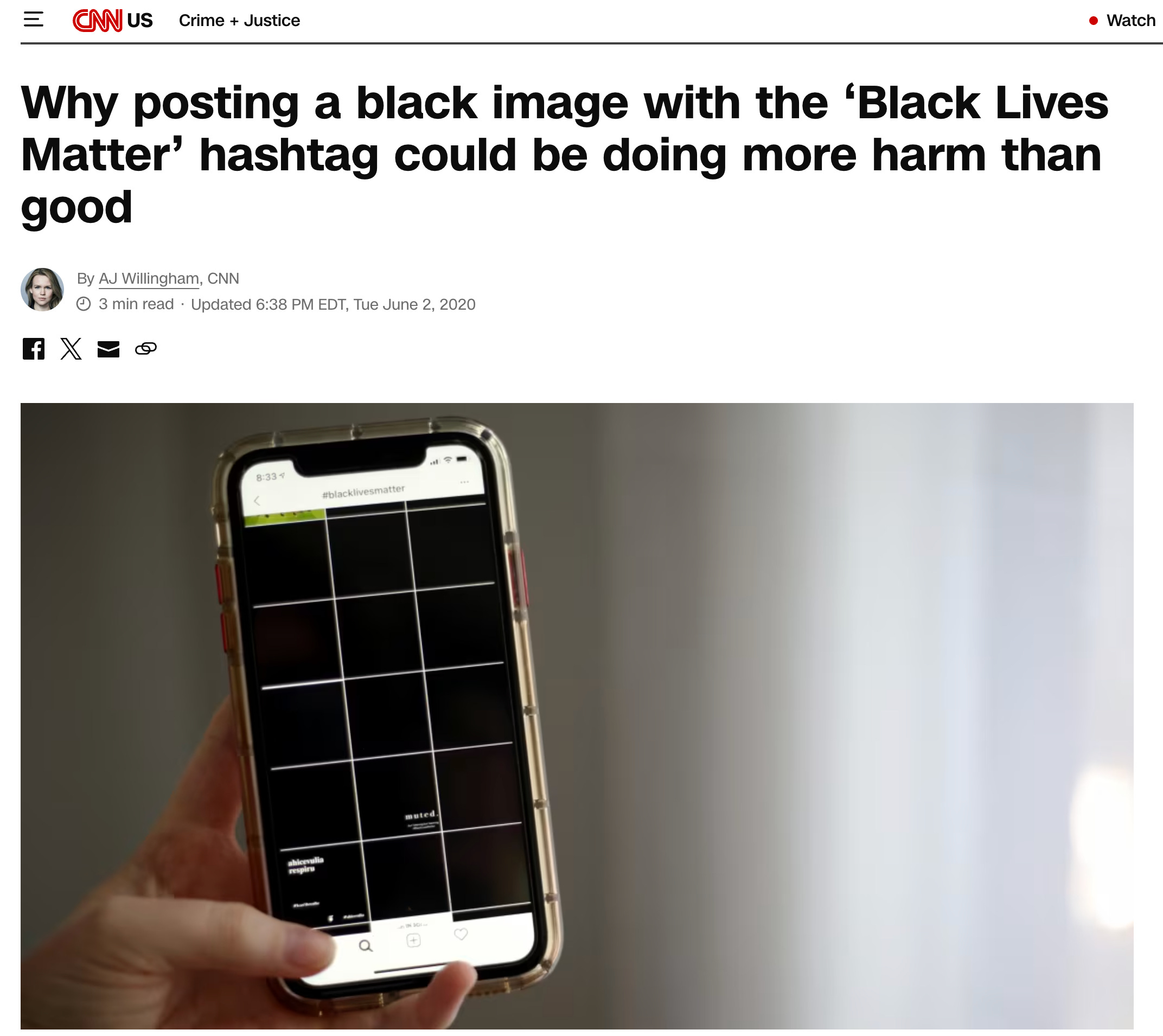
Though we fail to realize it, most of reality as we know it is mediated by the Screen. All that’s required to engage our belief-formation engine is for the Screen to provide us some stimulus. The basic essence of an Event and a well-constructed Story to accompany it is generally more than enough. If we can be convinced something might be true, that is sufficient.
We do not require a real Event. We are happy to accept the performance of an Event, as though it were real, on the basis of the well-constructed Story accompanying it. With Hollywood-style production capabilities and artificial intelligence, virtually anything can be displayed on the Screen and cause an audience to attribute a hard reality to what they believe they have witnessed. But it’s a bit worse than that. We do not actually require the performance of an Event in order to form a belief, only the existence of the Story that says an Event has been performed. We do not even need direct contact with the Story saying the Event has been performed. We only need to know what consensus demands we believe about the Story.
The Screen tells us what our side does and should believe about the Story of the Event that was said to have happened (but may not have). If it is a certainty that we will join our side’s consensus, the content of the belief itself, about which consensus is formed, becomes irrelevant. We will express agreement with our side about the substance, no matter the substance. To ignore even the Story, then, is simply a matter of expedience. We are made aware that a Story exists and we join our side in their assessment of the Event underlying that Story, based solely on the incentives for joining consensus.
The entity providing the incentives is therefore capable of creating consensus belief in absolutely anything. Passionate belief is not required. Passive, uncertain acceptance that a claim is possibly true is often sufficient to produce the desired behavior. If sort of agreeing with a claim fails to compel us to act, it will nonetheless provide a sufficient basis for us to condone the same actions when others perform them. We will condone virtually anything if it is done ostensibly in support of a notion with which we sort of agree. All that remains necessary is a well-constructed narrative, a good Story, well told.
From Ancient Greece to modern American cinema, good storytelling is marked by its ability to effectively induce emotional reaction in the audience. A great novel or script leads an audience through a consistent manipulation of positive and negative emotions. In vulnerable moments of intense emotional engagement, we are particularly susceptible to belief-induction. We allow all types of absurdity to bypass our skepticism and rational defenses. Reliably and predictably, we respond in the ways we are conditioned to respond.
We participate in the deception when we convince ourselves we have direct contact with the Events we see on the Screen. The reality is we have no way of confirming the Events were real as reported. If a Story can be told about a fictional Event and easily passed off as real, there is a non-zero chance that each Story we are told is a fiction that attaches in no discernible way to Reality Prime. A particular Event having occurred cannot be taken as a given just because there is a Story about it happening. This means we cannot approach any Story as though the Event described within is certain to have happened. There is no reason whatsoever to assume any given Event is real as reported. If an Event is not real as reported, in what way can we possibly know it to be real? As reported is the only contact we have with the Event. It is the most we can possibly have. Yet our lives are ruled by these Stories, believed on the assumption of Events being real as reported. We know we have no idea one way or the other. We cannot, forever, escape the implications of the fact that most of what we believe is bullshit. This has been tried by a great many of us. It only works for a time.
(Trump should narrate into reality a Golden Dome super force-shield—or whatever it is supposed to be—between the Story of the Event and our belief in any and every aspect of the Story. Our impenetrable defense already exists. We simply withhold belief from anything that cannot be known through direct knowledge, first principles, and sound logic. Then we must live accordingly, which requires dissent from consensus and the willingness to sacrifice the material incentives offered by the system. Just. Say. No.)
If we cannot confirm the Events are real as reported, we are left only with the fact that the Events were reported—the existence of a Story. We could know an honest reporter had seen the entire performance of a particular Event. That person could report, honestly, exactly what he or she saw. It would still be a matter of choosing to take someone’s word for it when relaying something they experienced. It would be putting our faith in a stranger’s lone perspective about an Event he or she may not even have properly seen or comprehended. Why would we ever be inclined to trust strangers about their interpretations of reality and then make moral decisions of consequence based on what the strangers have told us? This is especially true when those strangers become wealthy by effectively leading us to what we should think about the Stories they tell.
Our received knowledge—especially our Screen-mediated knowledge—is knowledge only of Stories, told by unreliable narrators, about Events that may or may not have happened. We are deathly afraid of admitting this because of its considerably larger implications for our lives. We have built up a social structure, and its accompanying mass psychology, based on refusing to acknowledge something we all absolutely know to be true: Most of what we think we know simply is not there and, deep inside, we all kind of know it. The houses of our knowledge have no foundations.
A Story must exist and we must know of the Story’s existence. Emotional manipulation and consensus coercion create a passive, uncertain belief that causes us to act or condone the actions of others. Neither the Event, nor the performance of the Event, nor any contact with any performance of the Event must occur. All that remains necessary is a well-constructed narrative, a good Story, well told.
How can we be certain that E→S is the way things work, virtually all the time, when the E is unnecessary and the S will be told, just as effectively, whether or not the E happened at all?
People who (intend to) steer the course of humanity would not leave their grand visions subject to the whims of fate nor would they spend their lives pining away for organically emerging circumstances that might nudge people in their direction. Real, organic Events, spontaneously occurring, will not guarantee the perfect mix of issues, circumstances, and emotions required to induce the beliefs necessary to cause the building of the desired reality. Why would those with such far-reaching powers wait for the world to spontaneously present imperfect, real Events when these same people are perfectly aware the Events themselves are unnecessary in the first place? Events can simply be staged and performed anytime the need presents itself. When an Event is manufactured, the Story in the mind of the narrator precedes the telling of the Story itself (the only real Event that occurs), S→E.
The Storytelling Event is the only Event with which we can have direct contact, not that we will. Many of us actively avoid making contact with these Storytelling Events, but they are ultimately unavoidable. Each of us will have collected some amount of passive, uncertain beliefs, drawn from authority and consensus, over the course of our lives. Those beliefs will be attached to an incentive-and-punishment structure capable of making and destroying lives. One that coerces people into moral degradation, through compliance with evil, in search of reward. If the beliefs we have collected over the course of our lives have led us to material obsession and moral devastation then we have been conditioned into bad beliefs, ones designed to drive us to ruin, and we should reject them.
Solving this problem should be the primary public concern if we expect any of the other problems to be solved. It is a change of mind and a change of heart on a massive scale. There is no political solution that can come prior to the mental and spiritual solution. The system will always create exactly this material obsession and moral devastation, eventually. It is designed that way. The incentive-and-punishment structure in a Scientific Materialist society makes exploitation, oppression, and enslavement inevitable. Inverted priorities predict abhorrent outcomes. As humans, we are enslaved to our sins and our vices. It is not wise to build a society whose sole purpose is enabling us to spend more time pursuing them. It is an exercise of free will, a choice to sacrifice those things to which we cling the tightest.
We have made our way past the perfectly natural, yet totally incorrect, notion that the Event precedes the Story virtually all the time. Let us focus some attention on the implications of the Story preceding the Event (S→E).
A well-constructed Story alone can reliably generate beliefs that drive behavior. It seems natural to assume that the more accurately a Story describes an Event that is real as reported, the more people will believe the Story, and thus know the truth about the Event. We assume that wholly fictional fake news, attached to no discernible Event whatsoever, would make for weaker, less believable Stories. But that is not so. Why should it be?
We routinely bear witness to the storytellers editing the details of Stories, in real time, for the sake of virality or to strengthen either side’s political arguments. If it is helpful to the agenda that the details of the Stories are exaggerated or enhanced in certain ways, then it is maximally helpful to exaggerate or enhance the Story in all possible ways, short of those that would cause the Story to be rejected. This is most easily accomplished with fiction, where every made-up aspect of a scene is maximized for captured attention, believability, and emotional impact. It is far more difficult with real Events, most of which are not particularly interesting. Which strategy is most productive to those ends: attempting to perfectly frame Stories about real Events or creating irrefutable fictions about not-quite-real Events? Unquestionably, the latter.

From the perspective of the storytellers, there is very little downside to projecting the ad hoc world of fiction rather than sourcing material from reality, whenever possible. Fictional Stories about not-quite-real Events (aka FAKE NEWS) are the most effective way to generate the beliefs that drive the desired behaviors. Fictional Stories are easier to tell and easier to control. They are malleable and can be adjusted. The desired changes can be implemented with a single news cycle or viral social media campaign. Because Story movements are planned in advance, reactions are considered, gamed out, and accounted for, built into the program before anyone knows there is a program.
It is difficult, if not impossible, within the Scientific Materialist epistemology, to refute a fictional Story. The storytellers are downstream from the same entities that control the material evidence underlying the Story’s creation, to the extent there is any. Disproving a fictional tale from inside the world of a fictional tale is nonsensical. It is a category error. This is why the Scientific Materialist approach to the mission of ‘truth’ is perpetually failing. There is, to a greater extent than anyone is comfortable admitting, no retrievable, decisive, underlying evidence to which we might appeal. This is why arguments about the political Soap Opera are perpetually inconclusive. There are no right answers, no underlying truth beyond that it is fiction.
The point is not that everything is totally fake. The point is that all of a certain kind of received knowledge might be. There is no denying that real things happen. They certainly do. Each one of us lives a life full of real things happening. Some of the real things that happen become dramatic Stories, told by ourselves or others, about Events we know to be real. Do these Stories—ones about Events we know to be real—match our memories of the Events they describe or are they dramatized (which is to say fictionalized, which is to say falsified)? Much of what appears on the Screen and in official histories and much of what we learn in State schools and from a culture geared toward centralizing State power, is not totally real. It is not required to be real at all.
The ability to consistently induce beliefs that drive behavior is the ability to control populations. (Real American men own Ford pickup trucks.) The ability to orchestrate the behavior of entire populations creates a bifurcation, the small minority of Orchestrators commanding the massive majority of the Orchestrated in any way they please. If Events are not necessary, and they can be produced, at will, if and when they become necessary, then the focus can shift to orchestrating the larger narrative agenda, performing Events wherever the Story calls for them. The goal, of course, is to achieve and maintain total domination within the Scientific Materialist paradigm—power, wealth, and status. The Orchestrated are steered into behaviors that cause them to devote their lives to building the world desired by the Orchestrators. Why would those in command of such power bother using it merely to convince people to choose Ford over Chevy when people can also be convinced to choose corrupt service over hard work, fornication over building families, and Scientific Materialism over God?
Perfect, total command over a centralized power hierarchy could conceivably be maintained through the use of force for a time, but that strategy is ultimately unsustainable. It is far better to manipulate those participating in the hierarchy to direct their energy toward perpetuating the hierarchy in all their activities. For the Orchestrators to maintain unyielding control over the system, the Orchestrated must enthusiastically support the system that places them in subjugation. The notion sounds crazy, but it is no more conceptually complicated than inducing Stockholm Syndrome across an entire culture. This is not only theoretically possible, it is visibly occurring and has throughout our lives. The Orchestrators inflict mass trauma across the population in every way they can, waging hybrid warfare against the Orchestrated while demanding the Orchestrated assume responsibility for our own suffering. (We do it to ourselves. We do. And that’s what really hurts.)
The desired state is for the Orchestrated to treat the Orchestrators as their gods, to worship them, to live in reverence and service. The State serves as proxy for the Orchestrators and, in the near future, artificial intelligence is intended to take its place above the State. As Scientific Materialists, we see the sum of worldly power embodied in the State and the sum of worldly knowledge embodied in artificial intelligence. With artificial intelligence, the State can assume the characteristics commonly attributed to God—omnipotence, omniscience, and omnipresence. These are the final authorities. Is it possible to convince entire populations of this? The answer is unequivocally, yes. It is our current state of being.
Is it possible to induce particular beliefs that lead the Orchestrated to disfigure our bodies? Is it possible to manipulate us to hate ourselves and our loved ones? Is it possible to nudge us toward addiction to drugs, or alcohol, or gambling, or pornography, or sex, or poisonous food, or Screens? Is it possible to lead us willfully to “wars” in which we proudly murder strangers across the world to empower the Orchestrators? Is it possible to convince humanity that normal human behavior will lead to mankind causing its own extinction via nuclear weapons, or climate change, or pandemic, or artificial intelligence becoming too smart for us to shut off? None of this is difficult. Most of these heinous beliefs could be induced simply through exposure to the advertising campaigns during professional football games or cable news. It becomes difficult to detect where the entertainment programming stops and the advertising programming begins.
Belief-induction, through emotional manipulation, orchestrates behavior that builds the world in ways that empower the Orchestrators. Then the cycle repeats, again and again. It is applied everywhere. If the Stories are told well enough, often enough, the Orchestrated state of being persists indefinitely. From the perspective of the Orchestrators, history repeats itself because it has to. History is the same collection of Stories told, with the same emotional manipulations, and the same beliefs induced, followed by the same behaviors acted into reality on the basis of those beliefs. Reverse engineer the process: the world must be changed in certain ways, therefore the same behaviors must be practiced, which means the same beliefs must be induced, which means the same emotional manipulations will be employed, the process repeating ad infinitum. The desired end suggests which Stories must be told in order to reach it. It is not difficult to reverse engineer Story progressions to support any goal. (A similar process is used to solve proofs in symbolic logic, backwards from the conclusion.) Why would such important matters be left to chance when the realities the Story demands can be scripted into being?
Orchestrating human belief and emotion is the craft of the artist, generally, but it is specifically the craft of the screenwriter, the playwright, and the novelist. The conventions of these forms have existed for as long as the forms have existed, each genre within each medium evincing its own form, necessitating particular story beats to create the good story, well told. Standard, traditional structures. Progression through plot points. Characters rise and fall and rise again, villains come within a whisker’s width of winning, the fated fall in love, heroes die honorable deaths. A good-looking Scientist (who acts like he is not a Scientist and is instead just highly intelligent) saves the world from a manmade disaster. It is not by mistake that Stories hit the same notes again and again. These are the notes that must be hit for a large audience to find a story compelling. Events are conceived and then exaggerated and enhanced in spectacular ways—limited only by what the Story’s own logic allows within the world built for the Story—and then acted out, all of it presented in a way that leaves the audience hungry for more. If more beliefs are required, more Events will be staged.
Stories that admit they are fiction (novels, movies, most television shows, etc…) must meet the requirements of form and genre but are unconstrained by any need to seem plausibly real. Stories that refuse to admit they are fiction (the News or the Science or a Reality Show) are specifically designed to blur the edge of where reality ends and the scripting begins. They must meet the same requirements as fiction but must, in addition, be inserted into reality as we know it.
No matter how scripted, staged, falsified, or otherwise unreal, the Story might seem, it becomes as real as any other part of reality as we know it as soon as it is anchored to Reality Prime by Events. Each of our unique conceptual models expands to encompass the additional reality to which we believe the Story has exposed us. We maintain no distinction between those bits of knowledge we have learned from experience (or discerned through first principles and sound logic) and those bits we have learned from the Screen. The clever storyteller knows this and so Events are scripted into the Story and then performed in reality to solidify the Story’s status as fully real.
Consider a hypothetical: The United States, after many decades of single-party rule under a bipartisan construct (let’s call it a Uniparty), tens of millions of foreign workers have been illegally imported to provide low-wage work for transnational corporations based in the US. Both political parties bear full responsibility. With mass migration of foreign workers comes cultural discord, crime, housing shortages, and depressed wages of native workers, among many other problems. Eventually, the native population gets sick of the systemic abuse the government has allowed and demands that the illegal aliens be removed from the country. Somehow, a leader from outside the Uniparty construct takes power after the latest fake election due to his clear public mandate to remove the illegal aliens. His position stands against the wishes of both sides of the Uniparty construct, though one side claims to (and is believed to) support the leader. The only way to stop the leader from conducting mass deportations is to reverse the clear public mandate, but how?
Reversing a public mandate is a public relations task which means a Story will be told, or many Stories will be told. Recall the variety of propaganda techniques described by Edward Bernays. Add to that arsenal Hollywood-style film production, paramilitary units, and artificial intelligence. Then supply the propagandist with unlimited resources (human, financial, technological, etc…). Give the propagandist overwhelming control over the distribution of information and the ability to censor anything he finds disruptive. In addition to the expendable resources, the propagandist knows he has a system behind him—a system whose existence depends on the work of its propagandists succeeding at all times. That system writes the laws, enforces the laws, and adjudicates when those laws have been broken, which means the system is not bound by the law whenever its needs dictate it not be. What Stories could the propagandist tell in order to collapse the public mandate for mass deportations? What pulls the Stories into reality as we know it?
The propagandist might claim that it is illegal for a President to remove people who entered the country illegally despite the President being the government’s chief law enforcement officer, tasked with defending the country from invasion. To insert the Story into reality as we know it, the system identifies a plausible victim class and wages lawfare on their behalf. The case is adjudicated in friendly courts where friendly judges decide for the plaintiffs. News cycles reaffirm the “illegality” of the President’s actions according to the friendly judge. There will be no media coverage of the decision when they are overturned on appeal, no attention paid. The courts have no legitimate means of stopping behavior that comports with the original Constitution. The headlines are the point.
Media outlets run relentless human-interest pieces on asylum seekers, aka illegal aliens, who stand to be deported, showing they have escaped terrible conditions in their home countries. Later, when the alien is deported, the media frames it as an act of cruelty, even if the alien removed is shown to be a criminal.
Protest movements framed as grassroots activism among concerned citizens—though they are actually funded and directed from far above by various organs of globalist philanthropy and led on the ground by community organizers—are incited around the country in key cities. Protesters shut down freeways. They confront police and federal law enforcement as they attack government buildings. A woman somehow ends up in the middle of an enforcement event as a legal observer and, we are told, is shot dead by an overzealous ICE agent because he believed, with plausible credibility, that he was about to be run over by the car the woman was driving. This occupies news cycles full of think-pieces while the drip-drip of “evidence” leaks out day by day, sparking additional controversies while the spin cycle proceeds. Not long after, the child of an illegal alien is made the centerpiece of a deportation controversy, that illustrates how cruel the officers are. Later, the situation resolves itself thanks to a Texas congressman with lofty political ambitions, as though the entire thing happened for the sake of the photo of the boy, a now-iconic symbol of deportation cruelty. A few days later, a legally armed man attending one of the globalist-funded and -directed protest Events (this one about the woman who was shot) gets into a confrontation with CBP agents and is shot dead. Later the same week, the umbrella agency above ICE and CBP, the Department of Homeland Security, faces the possible end of its funding under threat of a government shutdown. The chaos supplies the argument against the department’s continued funding. What timing!

These controversies are, of course, unresolvable. With no chance of a satisfactory resolution for either side, the chaos of the Events generates cycles of online rage-bait. The nation becomes embroiled in the latest round of Antifa-supporting commies on the woke left tickle-fighting based’n’redpilled Statists pretending to be “on the right”. The new alternative media (which is really just former mainstream media figures pretending to have gone independent) breaks down each aspect of the Event as though it is obviously real, organic, and spontaneous, not scheduled to occur, then staged, just before the DHS’ funding might be cut, perhaps permanently. Organized and well-funded influencer networks propagate and amplify the messaging, translating it for their own audiences.
Support for the mass deportation of illegal aliens is intentionally conflated with supporting the DHS, ICE, and CBP. But the DHS is an unconstitutional conglomeration of other unconstitutional agencies that simply should not exist. It is an embedding of the global Regime’s technological security state within the entrenched bureaucratic administrative state that we are led to believe is our legitimate government. In general, the bureaucracy operates unconstitutionally, placing itself largely beyond the president’s purview. The DHS in particular was created in the wake of passing the Patriot Act in response to 9/11. It handles immigration (poorly), emergency management (poorly), airport security (poorly), cybersecurity dealing with elections and online censorship (poorly), and other things (poorly). When an organization with so much power in so many areas of operation does its job atrociously for two decades, it should be assumed that the organization is actually doing some job other than we are led to believe it is doing, working not for the American people, but on behalf of the global Regime, with whose security and intelligence apparatus the DHS operates in conjunction.
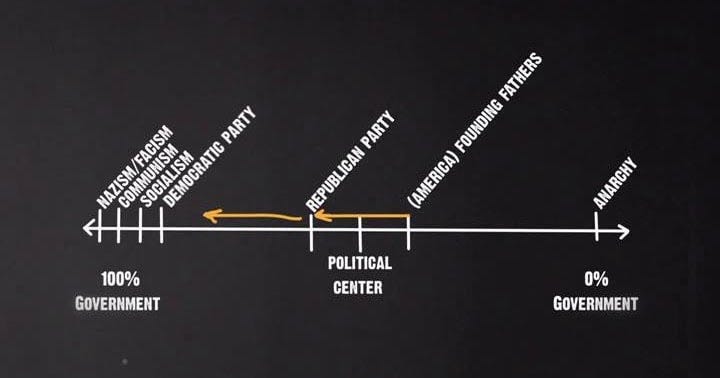
The “leftist” protest movement is organized and funded by global interests and the DHS they oppose is also organized and funded by global interests. The media operations backing both sides of the controversy are owned and run by global interests, as are the influencers who appear at all of these protest Events (the same influencers each time) to give us “the real Story” on what is really happening. The legal system adjudicating the issues is heavily influenced (if not outright controlled) by global interests. Both parties are aligned with global interests, despite one party vociferously aligning with DHS as a proxy for aligning with the leader battling the Uniparty. This activity generates a consensus understanding that the leader has lost his mandate for mass deportations and, if deportation efforts continue, his party will “lose” November’s fake elections.
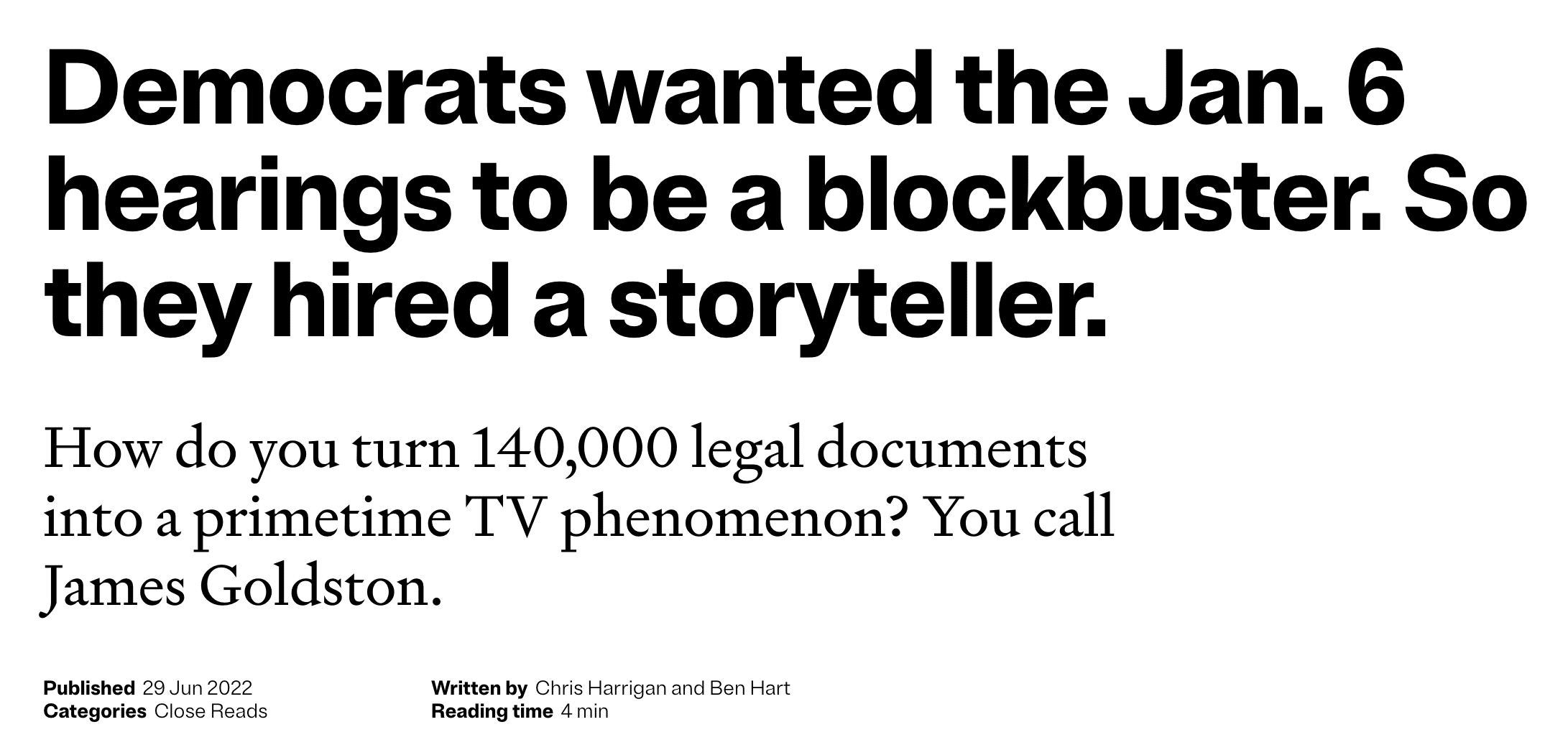
All of this is easily orchestrated. The Events are at least plausibly, if not obviously, scripted to occur and then staged as intricate parts of a public relations campaign designed to erode the public mandate by attempting to make the leader’s actions look weak, incompetent, cruel, and unlawful. If scripting so many Events is too difficult to believe, what about the Very Violent Insurrection of January 6th 2021, a prequel of Brazil’s January 8th 2023 “insurrection” and a rerun of the Maidan Massacre which was itself a rerun of the Reichstag Fire? What about the effort to hold people accountable? This is what is possible in a controlled confrontation staged for the sake of a Story and not, in any fathomable way, a real, organic, spontaneously occurring situation (though organic elements become part of the show).
It is entirely possible that a violent act could be staged in the midst of regular people attending a protest because they believe they are supporting a worthy cause. Having no idea it was play-acted, they witness a performance of violence. How obviously staged must an Event be before we become able to detect it? How much more obvious before we feel safe admitting to others what we have seen?
This is a performance of a shootout in Deadwood, South Dakota. The scene is performed multiple times each day. Those who witness the Event are there to witness what they know is a performance. But what if they did not know? What if that scene broke out spontaneously while people were window shopping on Main Street? What if the production value was higher and the scene more gritty and realistic? What if a woman in contemporary dress screaming for help and calling 9-1-1 was added to the scene? What if a middle-aged man rushed into the street shouting, “Clear the way, I’m a doctor!” and he mimicked keeping the actor alive until the ambulance arrived? What if fifty of the witnesses were planted extras who erupted into screaming and crying right on cue? What if the police arrived to tape off the streets and investigate, keeping the block closed overnight? What if vigils were held the following evening to celebrate the lives of those we lost? At what point does the shootout become unequivocally real to everyone who witnessed it?
How would we react if the same scene played out between an unconstitutional federal law enforcement agency portrayed as a right-wing death squad and a group of globalist-funded and -directed left-wing agitators portrayed as concerned citizens standing up to the overreach of an authoritarian state? What if the algorithmically manipulated conversation online was fully directed toward portraying the Event as a turning point in the nation’s history and in all our lives? Who, then, would doubt it, much less be willing to declare publicly that they do?
(Speaking of well-orchestrated turning points…)
What percentage of the horrors and controversies we are regularly subjected to through the Screen are scripted, staged, falsified, or otherwise unreal? The disturbing truth is that all of them could be. Most of us are totally ignorant to the possibility and oblivious to the occurrence. The exposure of our ignorance regarding something so fundamental is embarrassing. It would mean we are not correctly parsing the reality staring us in the face. To avoid embarrassment, we double down and deny that this sort of thing happens, despite it happening constantly. The result is a further degradation in our ability to prevent ourselves and our loved ones from regularly being hoodwinked and exploited. Stories that refuse to admit they are fiction become Stories that we refuse to admit are fiction.
The orchestration to destroy the President’s public mandate for deportations exists in parallel to numerous other orchestrations designed to destroy his public mandate for tariffs, for ending foreign wars, for the elimination of taxes, for the removal of burdensome over-regulation, for the end of globalism, for the end of fake elections, and so on. All of these efforts utilize the same tactics to elicit the same responses, all of it flowing in the same direction toward the same goal: a massive swing in public sentiment away from the President and toward the system whose destruction his mandate demands.
If the President’s mandate is destroyed, the threat to the global Regime’s control apparatus is eliminated. The Abstraction is Built Back Better into Reality Prime. The winners of history—that great series of Stories just like the ones playing on rerun today—will write the history of this time as well. And of course they will, for as long as we remain convinced that the Story about reality they tell is, in fact, the Story about reality. But the Story the Orchestrators tell is a Story about a false reality, where values are inverted and the centralized power of the Regime is the only solution to every problem, just as it always has been.
It may well be impossible to accurately discern, each and every time, whether or not an Event is orchestrated or organic, but the Story is always a Story and must be approached as such. Instead, we conflate the Story with the Event itself, attributing to the Event a hard reality which amounts to, essentially, believing whatever we are told. But the Story is only a Story, told by someone for some reason, and the Event is unknowable and may not have happened at all. The Orchestrators will always communicate, clearly, what they want us to believe and how we should respond. We can, in every instance, refuse to adopt the beliefs and refuse to respond as directed. We can recognize the orchestration. We can refuse to be Orchestrated.
What comes first, the Event or the Story about the Event? If the Event precedes the Story, the Event is unknowable except as a function of the Story. If the Story precedes the Event, the Event is likely not worth knowing. There is no chicken, only the egg. Or maybe there is only the chicken.
Your example of the “American male” pick-up branding called to mind for me the hyper-exaggerated style of the Cyber-truck. It is an offensive looking vehicle that mocks nature. It causes a feeling of revulsion in me akin to the horrid lighting in big box stores, and the advent of talking appliances. This newer tech which has been steam rolling forward is purposefully deployed to make God seem “quaint” and “passé.” I take heart as I hear people decrying the news, the tech, and the “science.” Some people are paying top dollar for “dumb” appliances, and thankfully I don’t see too many Cyber-trucks. We need to trust our gut, which was provided to us by our Creator. If it feels gross, acknowledge it, ALOUD. Create demand for what is real, good, righteous and beautiful.
If "Chicken-Egg-Chicken" could become a mandatory read and term paper assignment to graduate high school perhaps the indoctrination in college would be less significant and the beginning of thinking properly could develop for the nation.... and world....
Totally thought-provoking Chris... well done ... thank you.